

Finnish technology firms eye Vanuatu market
September 28, 2026 10:38 pm | Posted in Business News | Share now TwitterFacebook
By Nicholas Mwai.
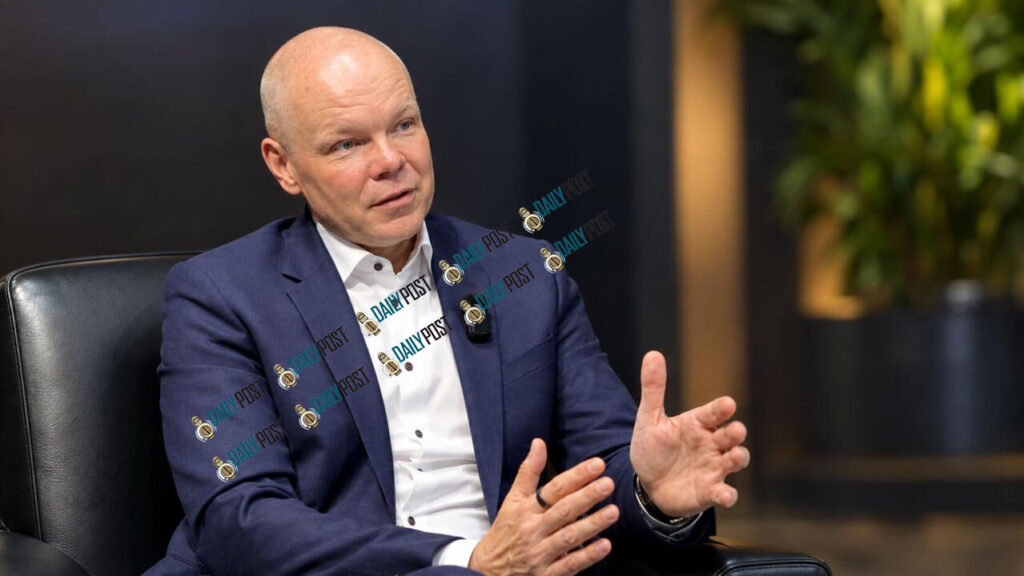
Finnish technology companies are looking at Vanuatu as a potential market for specialised technology, with telecommunications and satellite services emerging as areas where the two countries could develop new business partnerships.
Finland’s Ambassador to the Pacific, Arto Haapea, said his visit to Vanuatu is focused partly on identifying opportunities for closer commercial cooperation between Finnish companies and the Vanuatu market.
“We are far away from one another. Traditionally, we haven’t had too much engagement. But my job is to find out how we can work more closely together,” Mr. Haapea said.
One of the Finnish companies already operating indirectly in Vanuatu is Nokia, which supplies mobile network technology and is partnering with Digicel.
The Ambassador said Nokia was one example of how Finnish technology is already supporting communications in Vanuatu, even if consumers may not be aware of its involvement.
“My job is to look at, is there a way that I can support Nokia in forging an even closer partnership in Vanuatu?” he said.
But Nokia is only one part of the business opportunities Finland sees in the country.
Mr. Haapea said Finnish companies are particularly interested in markets where their technology can provide critical services, including communications and satellite technology.
“We often like to say that we are a trusted partner for countries in this region in all things critical,” he said.
“When we are talking about critical communications technology, critical satellite technology, other forms of technology, you don’t have to worry about any ulterior motives if you buy Finnish technology.”
For Vanuatu, a key opportunity raised during the ambassador’s visit is satellite technology that could support disaster response, climate monitoring and maritime surveillance.
Mr. Haapea highlighted Finnish satellite company ICEYE, which operates a large synthetic aperture radar (SAR) satellite network.
SAR technology can collect information through clouds and rain, allowing satellite data to be used in weather conditions where conventional imagery can be limited.
Ambassador Haapea said ICEYE can provide access to satellite capability within 24 hours of a contract being signed, either through leasing or purchasing data.
He said the technology is already being used by the Australian Federal Government for applications including bushfire and flood monitoring.
“ICEYE tells me that the Australian federal government has saved $70 million over the last couple of years by doing that,” he said.
The potential applications are particularly relevant to Vanuatu, where the Government faces challenges monitoring a large exclusive economic zone (EEZ) and responding to natural disasters across an island nation.
Mr. Haapea said maritime surveillance is one of the issues he plans to discuss with Vanuatu Government leaders.
“Keeping your EEZs safe is exactly one of the issues that I will be discussing here with the local leaders,” he said.
For Vanuatu businesses and government agencies, access to this type of technology could potentially create opportunities beyond simply purchasing equipment.
The ambassador described Finland’s approach as one that combines development cooperation with opportunities for Finnish companies to enter new markets.
He acknowledged that Pacific markets are small and that technology companies can face significant costs when establishing themselves in the region.
However, he said some Finnish technology companies view their presence in smaller markets as part of establishing themselves as global technology leaders.
“When they are a market leader, when they want to establish their position as a global market leader, they feel it’s some kind of corporate or global responsibility that they have to provide the technology and make sure that trusted technologies are also available here,” Mr. Haapea said.
Finland is also changing how it approaches development cooperation, according to the ambassador.
He said a significant amount of Finland’s development funding is now being directed towards supporting Ukraine, meaning the country has had to become more selective in other forms of development cooperation.
As a result, Finland is looking at models where development objectives can also create commercial opportunities for Finnish companies.
“We support a way to do good, but also so that our companies can benefit from that and find new markets and new business,” he said.
For Vanuatu, this could mean a different type of engagement from traditional development assistance, with technology companies potentially entering the market as commercial partners rather than simply as suppliers supported through grants.
Mr. Haapea said Finland was not seeking to replace Vanuatu’s existing international partners.
Instead, he said Finland wanted to add another option to the country’s existing network of partnerships.
“We fully respect that Vanuatu has long-term partners, and we’re not looking at breaking any of those partnerships,” he said.
“What we’re trying to do is add something to it.”
He pointed to Finland’s strengths in areas including mobile technology, satellites, quantum technology, artificial intelligence and meteorological equipment.
For a small economy such as Vanuatu, the challenge will be whether these technologies can be matched with practical local needs and sustainable financing.
The ambassador acknowledged that Finland itself may not be able to finance every technology project directly, but said it could work with other partners to explore financing options.
This could be particularly important for satellite technology, where the cost of accessing high-end data and services could otherwise be a barrier for government agencies.
The commercial discussions are still at an early stage.
Mr. Haapea was in Vanuatu for only a few days and said he expected to meet government ministers and other stakeholders to discuss potential technology offerings.
Among the issues on the table is whether satellite technology could strengthen Vanuatu’s ability to monitor its maritime space and improve responses to emergencies at sea.
The discussion comes as Vanuatu continues to consider how technology can strengthen disaster preparedness and response.
The ambassador’s visit therefore represents an early step in exploring whether Finnish technology companies can establish a stronger commercial presence in Vanuatu.
For Vanuatu, the potential opportunity is not simply about bringing another foreign technology provider into the market, but about whether specialised Finnish technology can address some of the country’s existing challenges in communications, climate monitoring, maritime surveillance and disaster response.
Mr. Haapea said Finland’s objective is to build closer cooperation while creating opportunities for its companies to find new markets.
“We are trying to do good, but also so that our companies can benefit from that and find new markets and new business,” he said.