

Santo Packhouse targets VT33M in farmer purchases as operations begin
September 3, 2026 11:05 pm | Posted in Business News | Share now TwitterFacebook
By Hilaire Bule.
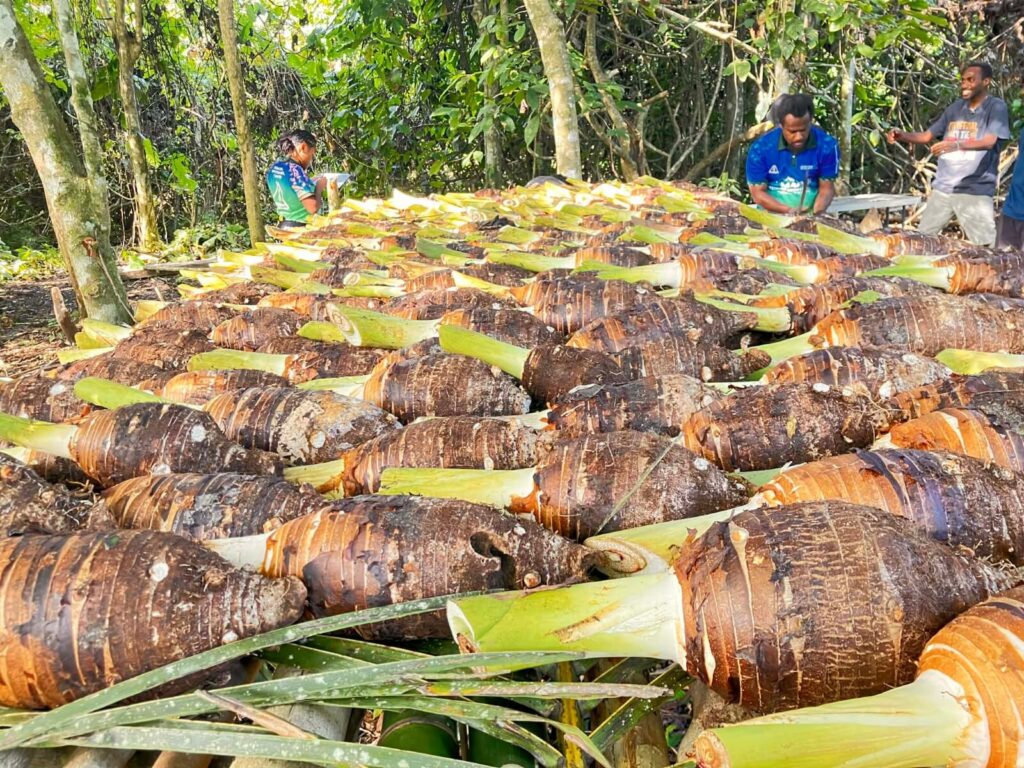
The Santo Packhouse is targeting approximately VT33 million in purchases from local farmers and suppliers between September and December 2026, as it begins its first commercial operating phase.
The initial focus will be on taro and dry coconut, with the facility potentially handling up to two shipments a month.
Chief Executive Officer (CEO) of the Vanuatu Bureau of Standards (VBS), Atanas Pipite, said the initial phase will help test and improve the packhouse’s operations before increasing production and adding more products.
He said the second priority is to expand by registering more farmers, improving harvest planning and increasing the supply of produce for regular shipments and once operations are stable, the packhouse will look at cassava, ginger, other root crops, frozen and processed products.
“Our principle is consistency before expansion,” said Pipite.
“ We must first demonstrate that every consignment can be traced, every shipment meets the buyer’s requirements and every participating farmer understands the required specifications. From that foundation, we can increase volumes, introduce new products and enter additional markets.”
He said the packhouse will develop its capacity to supply domestic institutions, including schools, hospitals, correctional centres and other public organisations. Meanwhile, VBS has completed a stakeholder consultation and training programme bringing together government agencies, logistics operators, packhouse staff and farmers to strengthen the supply chain from Santo farms to local and international markets.
The programme clarified each agency’s role in supporting farmers, product standards, inspections, certification, export documents and clearance.A separate meeting with logistics companies focused on shipping arrangements, container availability and the movement of produce to overseas markets.
CEO Pepite said this coordination is essential because agricultural exports depend on several interconnected responsibilities being completed correctly and on time.
“The packhouse therefore operates as the central point linking farmers, processors, regulatory agencies, logistics providers and international buyers,” he said.
The second stage of the programme focused on packhouse readiness, machinery setup and facility calibration.
Technical work covered the complete operational process, including receiving, weighing, inspecting, sorting, grading, soil removal, washing, drying, final inspection, packing, labelling, cold storage and dispatch.
Mr. Pepite said Santo Packhouse will maintain records covering farmer identification, farm location, commodity, delivery date, accepted quantity, processing batch, packed output, storage and shipment and will allow products to be traced from the supplying farmer through to the final export container.
Ahead of the Santo Packhouse expansion phase, the Minister of Trade Robson Iavro visited the facility and participating farms to assess operational readiness, available production and the capacity of local producers to support increased processing and export volumes. VBS CEO said the Minister’s visit reinforced the Government’s commitment to connecting public investment in packhouse infrastructure with practical production at the farm level, reliable market access and increased economic opportunities for Santo farmers.
Last week, Packhouse processing officers received practical training in personal hygiene, protective equipment, cleaning, sanitation, food safety and contamination prevention. The training supports the progressive implementation of good manufacturing practices and food-safety controls.
Government-funded packhouse personnel will perform the essential daily functions of receiving, weighing, recording, grading, washing, drying, packing, storing and preparing products for dispatch.
Daily operational controls will include inspections of the facility, machinery, water supply and cold-storage systems, together with hygiene checks, production records, waste monitoring, cleaning and security procedures.
Last week also saw producers received practical post-harvest training covering harvesting methods, field handling and the prevention of physical damage.
Mr Pepite said the training is very important because poor handling between the farm and the packhouse can reduce shelf life, increase rejection and undermine the commercial value of otherwise good-quality produce.
He said the training therefore concentrated on protecting product quality from the moment of harvest.
The final day covered dry curing and transportation practices where producers were shown how appropriate curing, storage and transport preparation can reduce deterioration and help produce arrive at the packhouse in suitable condition for processing and export. Mr Pepite said during the current establishment phase, the Government of Vanuatu remains the principal investor and programme sponsor and has funded the Santo Packhouse infrastructure, machinery, operational preparation, staff payroll and the initial activities required to activate the facility.
He said VBS manages the facility and oversees operational standards, quality assurance, food safety, traceability and coordination of the national packhouse programme and the Department of Agriculture and Rural Development supports farmers and production development. Biosecurity Vanuatu maintains its statutory inspection and phytosanitary responsibilities, while Customs and other relevant agencies support export clearance, documentation and trade facilitation.
Pepite said alongside this Government framework, the programme is being advanced through a public-private partnership with World Best Trading Vanuatu Ltd and combines the Government’s infrastructure, regulatory mandate and technical capacity with WBT’s commercial and international market experience.