

Sails won’t fix Vanuatu shipping
June 17, 2026 11:06 pm | Posted in Business News | Share now TwitterFacebook
By Charles Hakwa.
The Vanuatu Shipping Association (VSA) says the government should shift focus under the regional Blue Pacific Shipping Initiative away from idealistic wind-powered targets and toward practical domestic maritime needs, including slipways, engines, wharves and vessel maintenance.
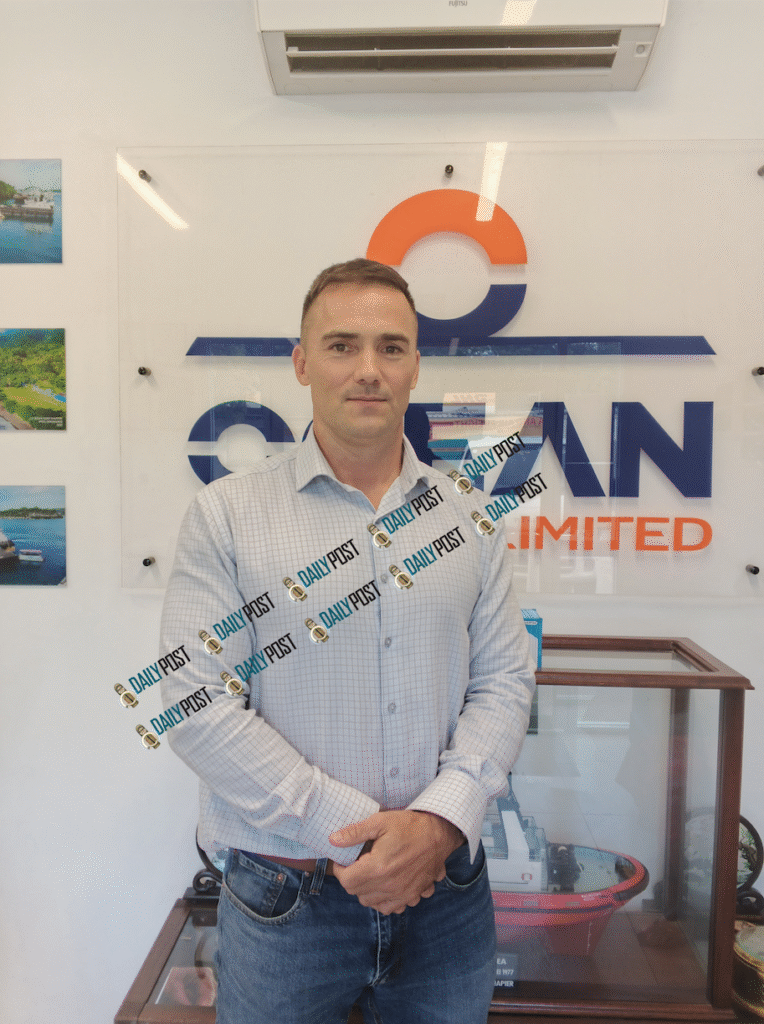
In an exclusive interview with the Vanuatu Daily Post, VSA Chairman and Ocean Logistics Limited (OLL) Chief Executive Officer (CEO) Andrew Bohn cautioned that providing a demonstration fleet of sailboats will not fix the structural emissions and maintenance challenges affecting the nation’s domestic trade routes.
While wind-assisted propulsion and sails work well for massive international tankers, Mr. Bohn is highly skeptical about their application on Vanuatu’s local workhorses.
“If we think about local vessels like the landing craft that Pierre Brunet Shipping runs, or Silent World, I just can’t see where you’re gonna stick the sail or how it’s going to work,” Mr. Bohn stated. He raised concerns that sails would heavily disrupt cargo operations or be easily damaged.
“I cannot see a large-scale adoption or return to sail by the majority of the Vanuatu-based shipping fleet,” Mr. Bohn stressed, noting the busy trade lanes from Efate to Tanna, Malekula, and Santo. While a gifted sailing cargo vessel could potentially serve heavily isolated outer islands like the Banks Islands or TAFEA provinces, Bohn maintains that wind is not the appropriate solution for the broader domestic fleet.
The VSA Chairman said the single fastest and most effective way to cut emissions and save fuel is not new technology, but basic maintenance: keeping ship hulls clean.
“A clean hull is going to get a 5% to 20% reduction in fuel usage,” Mr. Bohn explained. “You save money as a shipowner, and you burn less diesel, so you emit fewer emissions. That’s a win-win for the shipowner and for the climate.”
However, marine growth creates severe drag. Bohn compared the friction to swimming with full clothes on versus tight swimwear. To maintain efficiency, local ships must be hauled onto a slipway every two to three years to scrape away shells and reapply antifouling paint.
The core issue holding back local efficiency is Vanuatu’s severe lack of maritime infrastructure. Without proper wharves in the outer islands, domestic vessels are forced to beach themselves on the sand to drop their ramps and unload cargo.
“The first time they make a delivery and sit down on the sand beach, it’s going to cut out most of the paint on the bow section,” Bohn said, noting that his own company vessel, Ocean Chief, faced this immediate damage after its last slipway maintenance.
Once sand scratches the anti-fouling paint away, bare steel rusts rapidly, forcing ships to need the slipway much more frequently. Because Vanuatu lacks national slipway infrastructure, a massive backlog exists. Local shipowners are forced to sail their vessels to Fiji or the Solomon Islands for maintenance. Bohn called this option “very expensive,” adding that it wastes immense fuel just for transit and results in rushed, sub-standard work.
To break this cycle, Bohn believes Vanuatu must control its own maritime maintenance destiny. While a previous attempt by Pierre Burnett Shipping to establish a slipway in Port Vila was fiercely opposed by the local populace and tourism sector, Bohn points to Luganville, Santo as the nation’s industrial future.
OLL has already established an airbag roller slipway in Luganville, and he strongly believes any future national, multi-ship slipway project belongs there.
“I just can’t see how it works in Port Vila or that anybody ever gets behind that,” Mr. Bohn stated. “Luganville is probably the more appropriate location. And a slipway doesn’t mean dirty — it’s actually the place where you take your ship out to clean it, and it can be done 100% without damaging the environment.”
Bohn also mentioned that his company welcomes any public-private partnership with the government.
Rather than chasing wind-sail concepts, the VSA urges the government to direct climate finance toward modernisation that aligns with local realities. Bohn highlighted the potential transition to Tier 4 marine engines—the highest standard of fuel efficiency.
“There’s nobody in Vanuatu running Tier 4 engines at the moment, but that’s something that potentially could be part of our future,” he said. “It’s going to cost money—you’re talking about new-build ships and new engines. Through this partnership, there could be climate finance to help transition the Vanuatu domestic fleet into cleaner, more efficient vessels.”
Mr. Bohn also urged other shipping operators to join the VSA, as it is an open association for all to join and not exclusive to a few.
The Vanuatu Daily Post reached out to both relevant state bodies on Monday to secure official responses regarding the shipping sector’s criticisms, funding distribution, and alternative technological pathways. However, the Vanuatu Maritime Safety Authority (VMSA) and the Ministry of Climate Change Adaptation (MoCCA) did not comment prior to publication.