

From VT20 a shell to 24/7 kava: Manaseh Aru on 11 years in Vanuatu’s kava business
August 31, 2026 11:16 pm | Posted in Business News | Share now TwitterFacebook
By Nicholas Mwai.
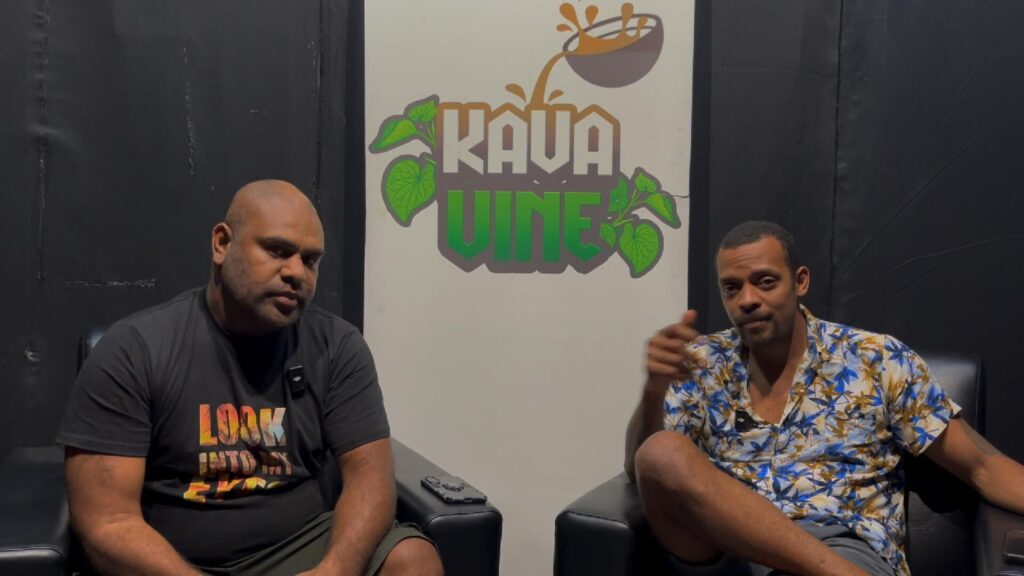
In this recent episode of Kava Mo Kajap (KmK), host Mavuku Tokona (MT) sits down with Manaseh Aru (MA), owner of Aurora Nakamal at Anamburu, commonly known by many customers as 24/7 Manaseh Nakamal. Aru shares how his childhood connection to kava, a chance decision to remain in Port Vila and his recognition of the capital’s growing demand for kava transformed his life and turned a small beginning into a major kava operation.
MT:Welcome back to another episode of Kava Mo Kajap. This week I’m joined by Manaseh, who is well known for the nakamal at Anamburu. Many people know it as 24/7 Manaseh Nakamal, but the actual name of the nakamal is Aurora Nakamal, named after Maewo.
Manaseh, first of all, why did you get into kava?
MA:I decided to get into kava marketing because I only attended school up to Class 4 back on Maewo, at the primary level. When I was growing up, my father was already running a kava business on the island.
At that time, they would pound kava and sell it for VT20 per shell. So I knew about kava because my father was working with it. I grew up with kava and I know it really well.
MT:You eventually moved to Port Vila. What brought you here?
MA:I moved to Port Vila in 2015, before Cyclone Pam. I didn’t originally come to Port Vila to start a kava business. I came because I needed to pay for my fishing gear.
I was living on the island and fishing, but I realised my fishing gear was not enough. So I followed the ship to Port Vila.
I didn’t come to stay permanently. I planned to follow the ship back to the island, but my aunty, Rose Daniel, who was working at Au Bon Marché (ABM) and is from Pentecost, told me I could stay for one week and that she would help me pay for my fishing gear.
Then she told me they were short of staff at ABM and asked if I could work there for a while. I worked there for three months.
MT:And that was when you noticed the demand for kava?
MA:Yes. After some time, I started walking around Port Vila and noticed there was a big demand for kava.
At that time, kava was being sold here for around VT300 to VT400 per kilogram. I happened to have some kava back on the farm, so I contacted my family and told them to harvest it, put it on the ship and send it to me in Port Vila.
MT:When you first started, were you selling green kava or making kava juice?
MA:I started by selling green kava, the root itself. But I saw that the demand was very high. Some of my family members back home also had kava, so I would send money to them and they would send kava to me here in Port Vila.
Then I decided to find an opportunity to start selling kava juice.
I started selling from a window at Agathis. I was paying about VT200 per kilogram for kava on the island. We made kava there for a while, but I realised I wasn’t doing well, so I stopped for a bit.
I went back to the island, bought more kava, came back to Port Vila and found another location at Emil, the place now known for the green kava market at Anamburu.
Back then, there were already kava bars and windows there. I started selling kilograms of green kava to other window operators while also making juice.
I realised that a lot of people liked my kava mix, so I stopped selling green kava by the kilogram and focused on juice. But my own kava supply was not enough. I had to start buying from other places and eventually from other islands, including Ambae and Santo.
MT:So at that point, you gave up fishing and your job at Au Bon Marché and focused entirely on kava?
MA:Yes. I let go of everything and focused on kava. I grew up with kava and I liked the job. I enjoyed it, so I decided to focus on kava only.
MT:Were you surprised when you came from the island and saw the huge demand for kava in Port Vila?
MA:Yes, I was surprised. I was also surprised that people who had been living in Port Vila for years could see the demand but did nothing about it.
MT:After 11 years in the business, do you still find it competitive?
MA:Yes, it is still competitive.
MT: Eleven years ago, you were paying around VT200 per kilogram. How much are you paying now?
MA:Now I pay around VT1,000 per kilogram.
MT: Is that for kava from Maewo or other islands?
MA: From Maewo, but Maewo cannot supply me with the quantity I need anymore. Now I focus on Santo because Santo is a consistent supplier every week.
MT: A lot of people say there is no kava in Port Vila and that kava must be finished on the islands. What would you say to that?
MA:Yes, kava is getting low in the islands. But if we look at the real situation, I can explain one of the main reasons why people are no longer interested in planting kava.
People are no longer interested in planting kava because of some of the middlemen.
A lot of farmers cannot come to Port Vila themselves. They find it difficult because they don’t know the places and don’t know where to stay. So they depend on people who are already here. They send their kava to these people to sell, and the money is supposed to be sent back to them.
But sometimes, when the farmer sends the kava, the person selling it here will sell the kava and then make excuses. They might say the kava was not good, some of it was rotten and had to be thrown away, or that the freight was expensive.
In the end, the farmer receives only a small amount of money. That discourages farmers from planting more kava and from sending kava to Port Vila again.
MT: So there is a big job to rebuild trust between kava farmers and middlemen?
MA: Yes.
I remember when we were buying from Santo. Some people were not paying farmers by kilogram. They would pay for one parachute bag, maybe VT100,000 or VT150,000. But one of those big bags could contain more than 100 heads of kava.
For me, that is a rip-off for the farmers.
MT: Are there also good middlemen who respect farmers and give them a fair share?
MA: I don’t know. I know there are a lot of bad ones, but I don’t know if there are good ones or not.
When you want to find a good middleman, a good middleman will never be short of kava during bad times. That person will always have kava because they are doing things properly. But when someone is always short of kava, it can mean they are not a good middleman.
MT: Your nakamal operates 24 hours a day, seven days a week. You told me you used to operate during normal hours, but when you saw how much demand there was, you switched to 24/7. You also have a large number of workers. At one point you mentioned 51 staff. How do you manage that?
MA: The 51 staff are not all full-time.
We have part-time workers because many of them are families and farmers. Some of the farmers come here before they travel overseas under the seasonal work programmes in New Zealand and Australia.
They come and stay with me and work part-time. They earn some money to help prepare their papers, passports and everything they need before they leave.
MT:And you have been operating 24/7 since 2021?
MA: Yes, about five years now.
MT:What is the biggest challenge of operating a 24-hour kava bar?
MA:The biggest challenge is when there is a shortage of kava.
For those of us operating 24-hour kava bars, when there is a shortage, I become worried. People will come looking for kava, and if there is none, we have a problem.
Sometimes I have to charter a plane. It is expensive, but we have to do it. Our name is important to our customers. We don’t want customers to come and find that we also have no kava.
MT: How much does it cost to charter a plane?
MA: When I charter a plane to Maewo, it costs around VT499,000. To Santo, it is around VT300,000.
MT: And how much kava can you bring on one flight?
MA:Around 500 to 600 kilograms.
MT: You have been building your resources for 11 years. You have built contacts, networks and financial resources, so you can respond to shortages in a way that smaller operators cannot. What advice would you give to others in the kava business?
MA: My advice to everyone in the kava business, especially nakamals and green kava sellers, is that it is better to save money or go to the bank and ask for a loan.
Use that money to buy a big bag and start from there. Then continue saving and make sure you have enough stock.
If you continue coming to the kava market every morning to buy and sell, then you depend completely on the green kava sellers. If there is a kava shortage, that’s it. You have nothing to sell.
Some people have been making kava for more than a year and still cannot afford to buy a bag. I don’t know how that is possible because when I started, I also started small.
I started by making one or two kilograms a night.
MT:So the lesson from your journey is to start small, but think ahead.
You started with one or two kilograms a night and gradually built your business. Now you are operating 24 hours a day, with a large workforce and a supply network stretching across different islands.
Your message to kava vendors is that you have to look ahead. If you need to take a loan, do it responsibly, build your stock and keep saving.
MA: Exactly.
MT:Because over the last 11 years, the demand has remained strong?
MA:The demand is the same, and it is getting higher.
MT:People are coming to your nakamal even in the morning. From 2016 to 2026, would you say the demand is still the same or even higher?
MA:Yes, it is even higher.
MT: Manase, thank you very much for coming on Kava Mo Kajap and sharing your story.
From growing up with kava on Maewo, to coming to Port Vila for fishing gear, getting a temporary job at Au Bon Marché, discovering the capital’s demand for kava and eventually building a 24/7 operation, your story shows how a small opportunity can become a major business when someone recognises the market and works to build it.
Thank you again for joining us.
MA: Thank you.
MT: And that’s it for this week. We’ll see you again in the next edition of KmK.