
Trade Talks Focus on Agriculture, Infrastructure, Investment
May 5, 2026 9:37 pm | Posted in Business News | Share now TwitterFacebook
By Ezra Toara.
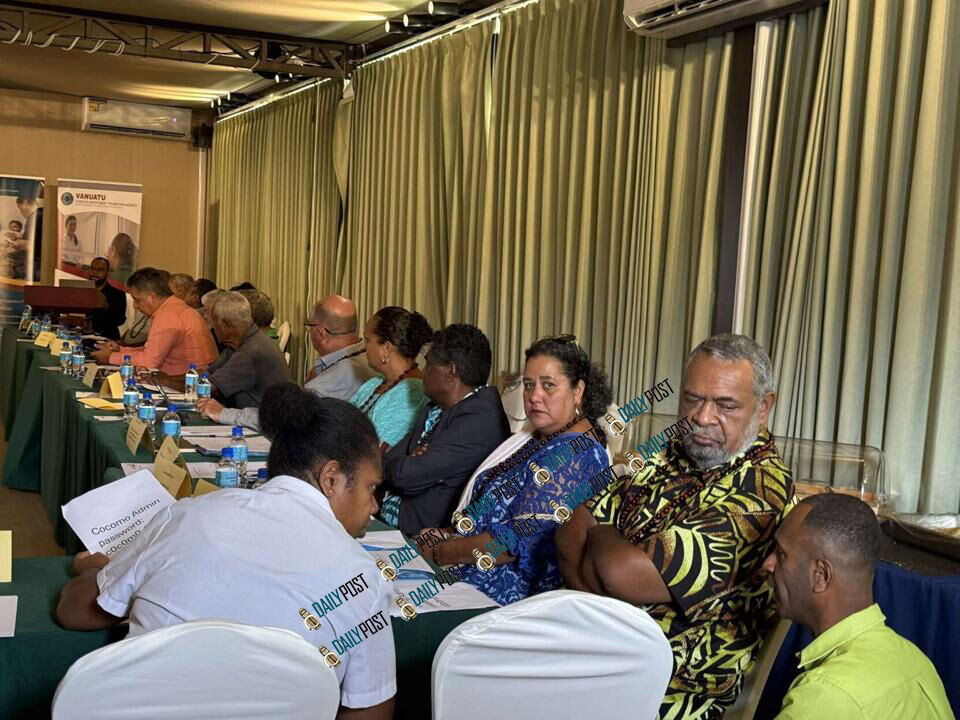
The New Caledonia Trade and Investment Mission is taking place this week in Vanuatu under the theme “V.O.I.C.E 2030: Vanuatu Opportunities for Investment and Caledonian Enterprises through Partnership,”with a strong focus on strengthening trade relations and opening new investment opportunities between Vanuatu and New Caledonia.
The mission brings together government representatives and private sector stakeholders from both sides to explore business development pathways, strengthen economic cooperation, and build long term partnerships that will benefit both economies.
Director General (DG) of the Ministry of Trade and Commerce (MOTC), Noah Patrick Kouback, said the initiative is designed to bridge the gap between the two neighbouring countries, which share deep historical, cultural and family ties but have yet to fully maximise trade and investment opportunities.
He explained that the forum follows a recent visit by Minister of Trade Samson Samsen to New Caledonia in March, where discussions with major businesses showed strong interest in investing in Vanuatu. As a result, this week’s forum has brought together investors and representatives from key sectors including tourism, agro processing, construction, and government institutions.
“The purpose of this forum is to bring the two countries together. While we share close ties, we have not been fully working together in terms of trade and investment. This platform allows us to exchange information and identify real opportunities,” DG Kouback said.
He said one of the key objectives is to provide New Caledonian businesses with a clearer understanding of Vanuatu’s business environment, including investment processes, eligibility for government tenders, and opportunities in major infrastructure projects such as roads, bridges, airports and port developments.
DG Kouback also pointed to emerging areas of cooperation, particularly in agriculture and agro processing, where both countries can benefit from shared resources and expertise.
He said discussions are also underway on the potential use of industrial by products, such as slag from nickel production in New Caledonia, as an alternative material for construction in Vanuatu. The initiative could support climate resilience and sustainable development.
“This is about looking at alternatives and addressing challenges like climate change while building our infrastructure in a sustainable way,” he said.
A key development from the mission is the planned signing of a Memorandum of Understanding (MOU) to strengthen logistics and trade connectivity. Central to this is the introduction of a cargo vessel, Karaka, which will support the movement of goods between the two countries. Unlike previous passenger vessels, the cargo ship will transport goods to Vanuatu and return with locally produced commodities, particularly from Espiritu Santo, for export to New Caledonia.
DG Kouback described the initiative as a practical step toward improving trade flows and supporting local producers, especially small and indigenous businesses, by giving them access to regional markets.
He said the current engagement focuses on government to business discussions, while a follow up business-to-business forum is planned for July, expected to further strengthen partnerships and commercial activities.
Despite their geographical proximity, DG Kouback said trade between Vanuatu and New Caledonia has historically been limited, describing the situation as “near, but feeling far.”
He said there is need for a shift in mindset, encouraging greater collaboration within the Pacific region rather than relying heavily on traditional partners such as Australia and New Zealand.
“It is time for business, time for trade, and time to support our local enterprises. We have opportunities around us, and we must make use of them,” he said.
The MOTC DG also spoke on the importance of increasing local production and reducing reliance on imports, linking this to broader national concerns such as Non-Communicable Diseases (NCDs). Encouraging domestic agriculture and consumption, he said, is important for both economic and public health outcomes.
Minister of Finance and Deputy Prime Minister Johnny Koanapo reaffirmed the government’s commitment to strengthening economic ties with New Caledonia, describing the partnership as strategically important for regional integration and sustainable development.
He said the initiative will allow businesses from New Caledonia to better understand Vanuatu’s investment landscape through direct engagement with government agencies and improved information sharing.
“The strengthening of trade and investment through improved transport logistics and private sector linkages is critical. By reducing barriers and improving efficiency, we create a more attractive environment for investors,” Minister Koanapo said.
He said economic growth in Vanuatu is driven by the private sector, while government ensures a stable, transparent and enabling environment for businesses to operate and expand.
The Minister also outlined that Vanuatu’s development strategy focuses on strengthening domestic industries, promoting value added production, and improving regional integration. Partnerships with New Caledonian enterprises, he said, are important in achieving these goals.
“To our partners, a clear message is extended: Vanuatu stands ready to work with you as a reliable and committed partner. Collaboration that delivers real benefits and shared prosperity is sought,” he said.
The mission is expected to conclude with outcomes including follow up actions, potential joint ventures, and stronger economic ties contributing to long-term growth for both Vanuatu and New Caledonia.