
Quality tourism, not visitor numbers, should drive Vanuatu’s future – Semone
June 22, 2026 11:13 pm | Posted in Business News | Share now TwitterFacebook
By Ezra Toara.
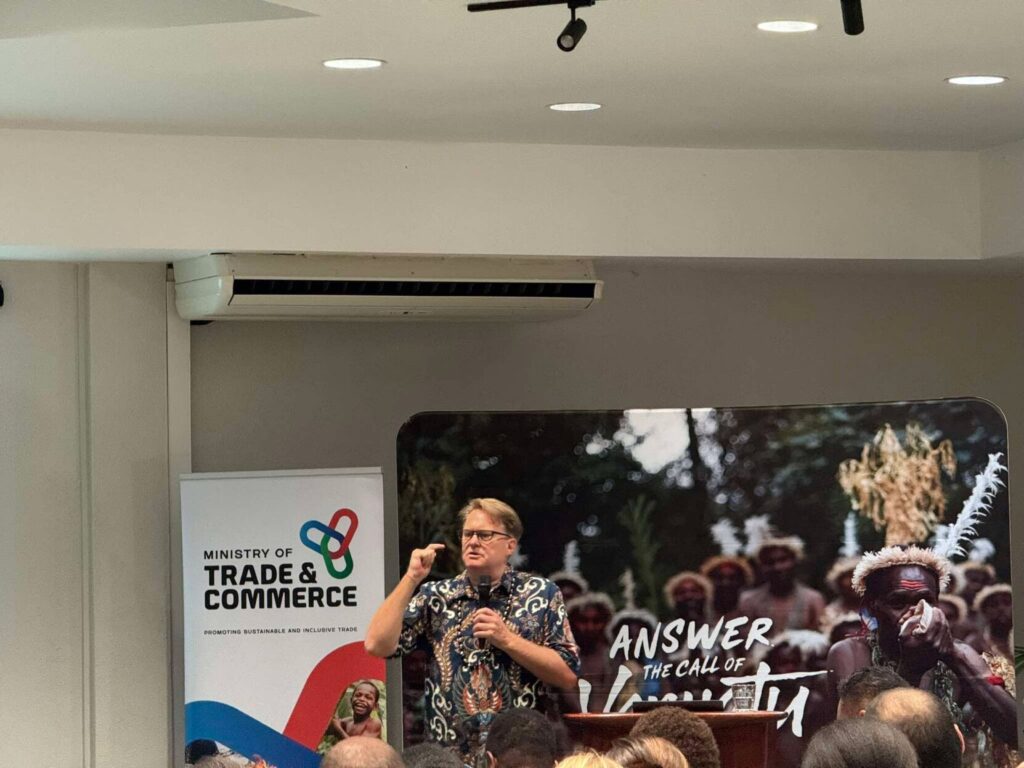
As Vanuatu seeks to rebuild and strengthen its tourism industry following recent challenges, including natural disasters and global economic uncertainty, the country has been encouraged to focus on quality tourism, community benefits and sustainable growth rather than simply increasing visitor numbers.
Speaking during the 3rd Edition of the Vanuatu Tourism Market Forum, outgoing Chairman of the Pacific Asia Travel Association (PATA), Peter Semone, said Vanuatu possesses a unique advantage as a raw, authentic and largely untouched destination that remains highly attractive to international travellers.
Mr. Semone thanked the Vanuatu Tourism Office (VTO) for the invitation and shared insights from his decades-long career in tourism across Asia.
He explained that PATA was established in 1951 as the Pacific Area Travel Association by World War II veterans who saw tourism as a pathway to economic recovery and opportunity for Pacific communities.
Over time, the organisation expanded its focus to become the Pacific Asia Travel Association.
Drawing on his extensive experience throughout Asia, Semone highlighted the remarkable growth of the Asian tourism market, noting that approximately 70 percent of tourist arrivals within Asia originate from Asian countries themselves.
He encouraged Pacific nations, including Vanuatu, to consider how greater regional travel could strengthen tourism demand within the Pacific.
“Why doesn’t more demand for the Pacific come from within your own islands?” Semone asked, suggesting that Pacific island nations should focus on developing stronger regional tourism markets in addition to attracting visitors from Australia, New Zealand and other international destinations.
Learning from Bali’s experience
Semone reflected on his long association with Bali, Indonesia, where he first worked in the late 1980s. He said Vanuatu today reminds him of Bali before mass tourism transformed the island.
While acknowledging tourism’s economic benefits, he warned that uncontrolled visitor growth can damage local culture, land and community values.
“Tourism is a double-edged sword,” he said. “You don’t want numbers. You want quality.”
According to Semone, tourism success should no longer be measured solely by arrival statistics. Instead, governments and tourism authorities should evaluate how tourism benefits communities and contributes to society.
“It’s not about the number of visitors. It’s about the impact that those visitors and this industry have on communities,” he said.
Shift towards “meaningful tourism”
Semone outlined PATA’s evolving concept of “meaningful tourism”, which moves beyond traditional sustainability measures focused primarily on environmental protection.
He said meaningful tourism examines whether tourism genuinely improves people’s lives and benefits communities.
“Tourism cannot just be economics,” he said. “It has to be much more than that.”
He noted that younger travellers increasingly seek authentic and meaningful experiences rather than traditional beach holidays. Vanuatu’s authentic culture, natural environment and remote location provide a significant competitive advantage in this changing market.
“Raw is a really great word. It’s authentic, it’s raw, it’s real,” Semone said, referring to Vanuatu’s tourism branding.
He added that Vanuatu still possesses a strong “wow factor” among international travellers who view the country as an exciting and unique destination.
Asia-Pacific tourism leads global recovery
Presenting global tourism data, Semone said international tourism has fully recovered from the COVID-19 pandemic.
According to figures from the World Travel and Tourism Council shared by Semone, global tourist arrivals reached 1.54 billion in 2025, surpassing pre-pandemic levels recorded in 2019.
Tourism’s contribution to the global economy reached approximately US$11.6 trillion, while tourism GDP growth outpaced overall global economic growth.
He highlighted that the Asia-Pacific region currently represents the fastest-growing tourism market globally, recording regional arrival growth of 7.7 percent and visitor spending growth of 8.3 percent.
Semone said this growth presents opportunities for Pacific destinations, including Vanuatu, to attract more Asian visitors.
“The Asians are extremely interested to come here,” he said. “They just don’t know where it is, they don’t know what it is, and they don’t know how to get here.”
Eco-tourism and outer islands hold key potential
Rather than pursuing large-scale resort developments, Semone suggested that Vanuatu focus on high-end eco-tourism experiences in the country’s outer islands.
He said boutique eco-lodges with 15 to 25 rooms located in natural settings could command premium prices while preserving local environments and communities.
“The real attraction of these countries is the outer islands,” he said.
Semone stressed that tourists increasingly seek unique experiences rather than luxury hotel infrastructure that can already be found elsewhere in Asia.
“You will never be able to compete with Asia in terms of the quality of hotels and service,” he said. “But that shouldn’t make you sad. You have to be different.”
Connectivity remains critical
Aviation and transport connectivity remain among the greatest challenges facing Pacific tourism, according to Semone.
He called for greater regional cooperation and encouraged Pacific nations to promote multi-country itineraries that allow travellers to visit several island nations during a single trip.
Semone also highlighted the importance of seamless travel experiences, including simplified baggage transfers and improved flight connections between destinations.
“Sell the Pacific as a destination,” he urged.
Technology, AI and the future of tourism
Semone told delegates that artificial intelligence will fundamentally transform tourism over the next decade.
He explained that tourism marketing is moving away from traditional internet searches towards AI-powered conversations and recommendations.
“In the conversational era, you’re competing for recommendation,” he said.
While embracing technological innovation, Semone stressed that technology should never replace human interaction.
“People travel because they want to meet people,” he said.
He also suggested that destinations like Vanuatu could capitalise on growing demand for digital detox experiences by encouraging visitors to disconnect from technology and reconnect with nature and local communities.
Reducing economic leakage
A major focus of Semone’s presentation was reducing tourism revenue leakage from Pacific economies.
He highlighted commissions paid to international online travel agencies, hotel management fees and imported goods as significant factors draining money from local economies.
“The role of government, in partnership with industry, has to be to reduce those leakages,” he said.
He encouraged policymakers to develop tourism models that maximise local ownership, local products and local economic participation.
Tourism must benefit communities
Concluding his presentation, Semone emphasised that tourism development should ultimately benefit communities rather than simply generate visitor numbers.
He encouraged Vanuatu to position itself as a safe, authentic, resilient and sustainable destination while maintaining its cultural identity and natural environment.
“It’s not about the number of visitors,” he said. “It’s about the quality of the visitors. It’s about the impact of the visitors.”
Semone said Vanuatu’s future tourism success would depend on balancing sustainability, connectivity, resilience, technology and community participation while preserving the unique qualities that make the country attractive to travellers from around the world.