

Island to Global Program pushes Ni-Vanuatu SMEs toward export markets
December 8, 2025 11:10 pm | Posted in Business News | Share now TwitterFacebook
By Nicholas Mwai.
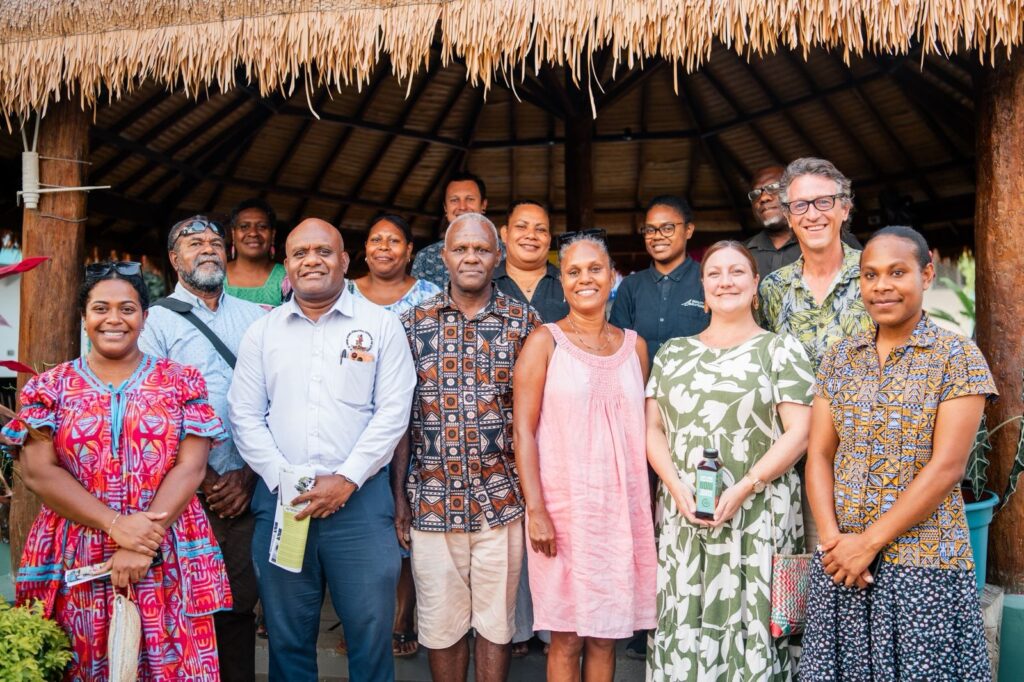
The Island to Global (I2G) programme has concluded after 15 months, aimed at transforming how Ni-Vanuatu small businesses prepare for international markets. Organisers describe it as a major step toward strengthening the country’s export capacity.
Funded by the Australian Government and delivered by V-Lab in partnership with PACER (Pacific Agreement on Closer Economic Relations) Plus, the initiative supported five Indigenous-owned enterprises: Green Forest Oils (Esmie Jimmy), Malo Noni (Edward Moli), Muvuten Development (Roy Tining), Natural Taste of Vanuatu (Juliana J), and Tahun Kava Export (Sergine Tahun).
Through expert training in export certification, financial systems, biosecurity requirements, marketing, and digital readiness, the businesses were equipped with skills to navigate international markets. Participants also gained direct exposure at major trade events including the Naturally Good Expo in Australia and the Pasifika Festival in New Zealand, where they engaged with buyers, distributors, and potential partners.
V-Lab President Marc-Antoine Morel said the programme focused deliberately on non-mainstream products to discover new export opportunities for Vanuatu.
“We chose to work with people and products that are not mainstream. The objective was to equip local Indigenous businesses with the skills and connections needed for export,” Morel said.
He added that several participants have already begun exporting their products thanks to the programme’s support and their own commitment.
A key component of I2G was analysing gaps within Vanuatu’s export system. The programme identified structural challenges such as the absence of a local raw-material aggregator and the lack of Vanuatu-based trade representatives abroad to provide market intelligence and regulatory guidance.
Morel said these findings show the need for government reform. “Vanuatu needs a more strategic and market-driven approach. If you always do what you’ve always done, you will always get what you’ve always got,” he said, calling for targeted support to high-potential businesses rather than spreading resources too thinly.
PACER Plus National Coordinator Michael Ligo echoed this view, saying the programme filled a long-standing gap in export support for small and Indigenous businesses.
“Small and medium businesses didn’t have much space in export markets and were not given enough opportunity. We stepped into an area that wasn’t done before,” Ligo said.
He encouraged entrepreneurs to embrace innovation and take bold steps toward international trade. “We shouldn’t be scared to try new things. We shouldn’t be scared to take risks,” he said.
Ligo confirmed that PACER Plus has secured a five-year extension, allowing partners to refine and expand the model established under I2G. The lessons from this pilot will shape future export-support programmes aimed at closing technical, financial, and capacity gaps for Ni-Vanuatu businesses.
As the programme concludes, partners recommend a more coordinated national export strategy—one that aligns government, private sector, and development partners around certification, financing, logistics, and market access. With such systems in place, Ni-Vanuatu producers can compete more confidently on regional and global stages.