
Air Vanuatu Board Defends Executive Appointments, Pay, and Restructuring Decisions
June 8, 2026 11:03 pm | Posted in Business News | Share now TwitterFacebook
By Doddy Morris.
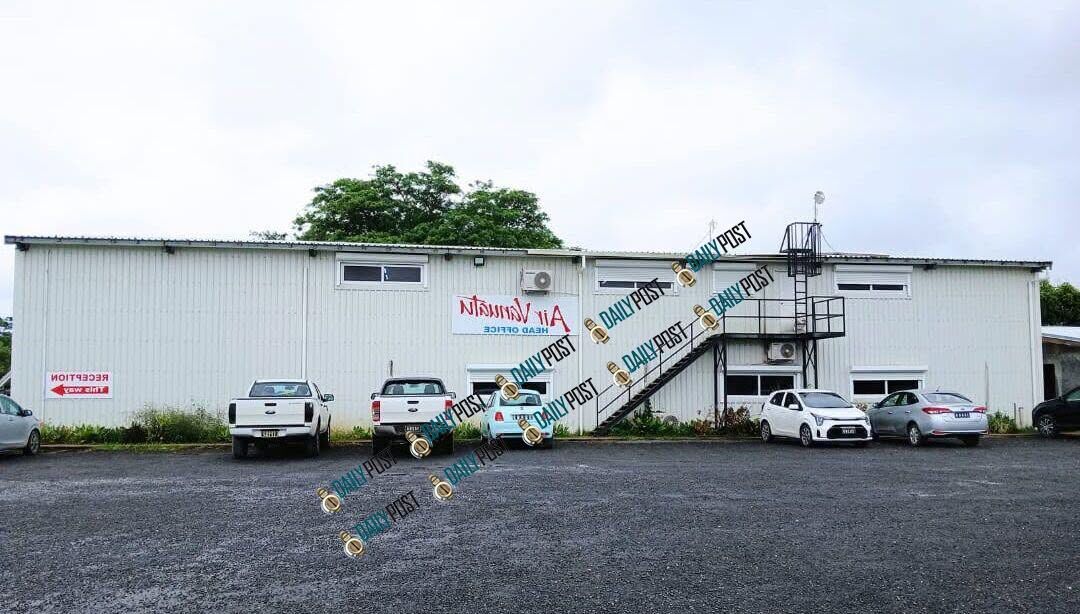
The Air Vanuatu Board of Directors has defended its executive recruitment, pay arrangements, and restructuring process amid public questions on governance and financial decisions.
Chairman of the Board of Air Vanuatu, Robin Deamer, responded to recent public queries and allegations relating to executive recruitment, remuneration, governance arrangements, and the airline’s restructuring process.
Mr. Deamer confirmed that recent executive appointments, including the Chief Executive Officer (CEO) position, were carried out under the framework of the Commercial Government Business Enterprises Act 2024.
He stated that the Board appointed in August 2025 was selected on merit by the responsible Minister and that the CEO role was publicly advertised, with applications closing on 6 April 2026.
According to the Board, the recruitment process followed a standard sequence involving public advertisement, shortlisting, panel interviews, and final ministerial endorsement, followed by HR-led background checks before appointment.
The Board also indicated that documentation of advertisement references and dates could be made available upon request.
On executive remuneration, Deamer said pay levels are determined within the same legislative framework, approved by the Board, and benchmarked against comparable roles. He referenced a comparable state aviation enterprise CEO role in Vanuatu advertised at around VT10,000,000 per year plus allowances, and noted that executive packages in regional carriers can reach several million US dollars.
In this context, he argued that remuneration at Air Vanuatu is significantly lower than regional norms and reflects the airline’s status as a domestic carrier in a recovery phase.
He also noted that the Board discloses remuneration in framework terms rather than publishing individual salaries, consistent with standard governance practice.
The Chairman further outlined the governance structure overseeing the airline, stating that operations are governed under the Commercial Government Business Enterprises Act 2024.
He said the Chief Executive is responsible for delivering strategic objectives, safeguarding shareholder interests, and ensuring regulatory compliance, while the Board provides oversight. Additional layers of governance include oversight from the Commercial Investment Unit in relation to board appointments and regulatory supervision from the Civil Aviation Authority of Vanuatu regarding safety and fit-and-proper requirements.
Addressing concerns about financial comparisons between restructuring costs and the Airbus deposit, the Board said the two matters are unrelated and should not be conflated. It explained that the pre-delivery payment for a 2019 order of the Airbus A220, estimated at US$17–20 million, was made under a previous board and is considered recoverable, with ongoing engagement with Airbus.
The restructuring itself, according to the Board, involved a contribution of US$3.3 million under a Deed of Compromise to settle creditor claims of nearly US$129 million while keeping the national carrier operational, protecting jobs, and maintaining domestic connectivity. The Board also highlighted investment in two rebuilt Twin Otter aircraft as part of restoring domestic services, arguing that comparing the Airbus deposit with restructuring costs is not appropriate as they relate to different financial contexts.
Deamer reiterated that Air Vanuatu remains committed to transparency as recovery efforts continue, noting that certain shareholder-related matters remain the responsibility of the government through the relevant minister, and that the Board remains open to further discussion as the restructuring progresses.