

The urgent need for reliable transport services in TAFEA’s Outer Islands
August 18, 2026 11:16 pm | Posted in Business News | Share now TwitterFacebook
By Ezra Toara.
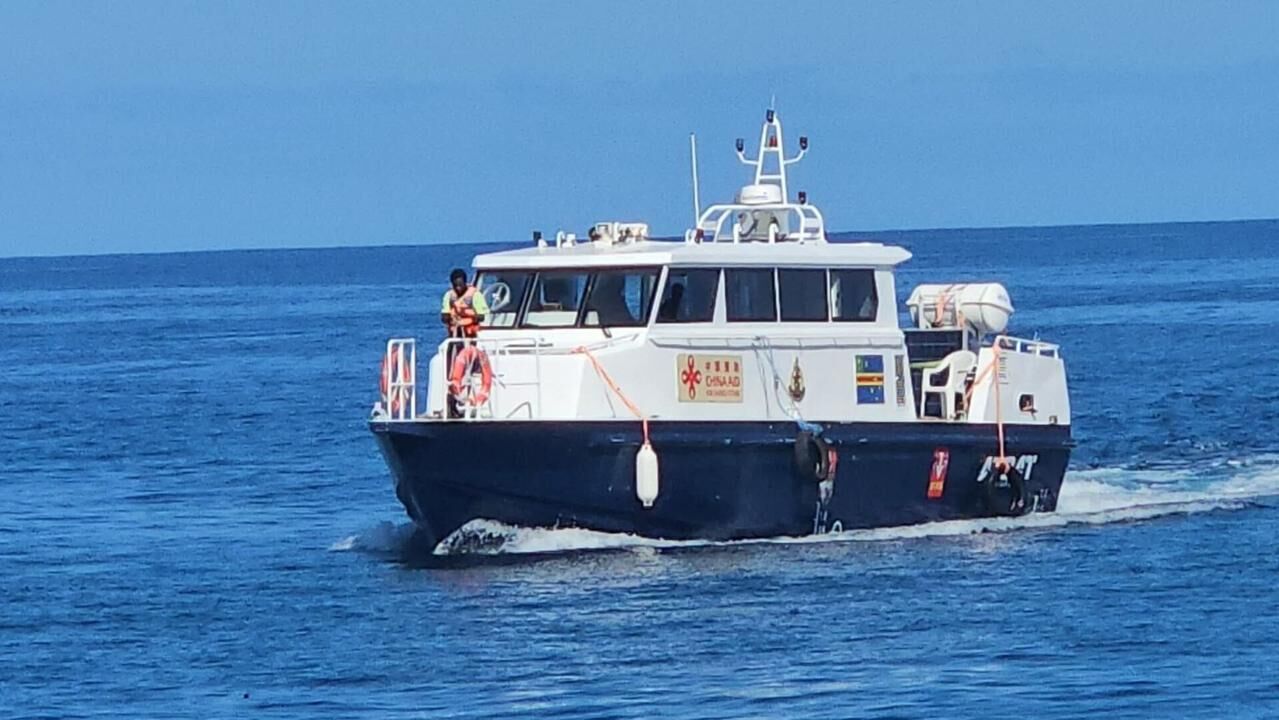
Recent incidents involving boats travelling between TAFEA’s islands should prompt a broader question about how to provide outer-island communities with safer, more regular and reliable transport, says Mike George, a Professor and Academic Deputy Principal at Lycée Louis Antoine de Bougainville.
George said the transport challenges facing Aniwa, Futuna, Erromango and other outer-island communities affect access to health care, education, markets, government services and economic opportunities.
“These tragedies should encourage us to look beyond the individual incidents and ask a broader question: How can we provide our outer-island communities with safer, more regular and more reliable transportation options?” George said.
Vanuatu’s geography is both a strength and one of its greatest development challenges, George said, with the issue particularly evident in TAFEA’s outer islands.
He said both air and maritime transport remain inconsistent for many outer-island communities, directly affecting access to health care, education, markets, commerce, employment opportunities, government services, migration and cultural engagement.
For many people in Aniwa, Futuna and Erromango, George said that when regular air or shipping services are unavailable, the sea becomes the only practical option.
“Our people continue to use boats to travel between Tanna, Aniwa and Erromango because other forms of transportation are not always available or consistent,” he said.
“For many families, travelling by boat is not a choice based on convenience—it is often the shortest, most accessible and most affordable means of transportation available to them.”
George said even government officials serving on the outer islands are often forced to use the same means of transport, creating additional pressure and putting their lives at risk.
“Even Government officials serving on our islands have no choice but to use the same means of transport, adding more burden on them and putting their lives at risk, their families as well. If any accident may occur, we will not lose the officers but some children will lose their parents and families, just like our families who are lost at sea,” he said.
However, George warned that reliance on small boats and irregular maritime services can become particularly dangerous during periods of poor weather.
“When communities are forced to rely on small boats or irregular maritime services, particularly during periods of poor weather, the risks become much greater,” he said.
He said recent incidents involving boats travelling between Aniwa and Tanna, and Erromango and Tanna, have reminded communities of the dangers faced when reliable transportation options are limited.
George said the situation in Futuna illustrates the transportation challenge particularly well, with communities sometimes waiting between three and six months for a cargo boat.
“For an island community, this is not simply an inconvenience. It affects the availability and cost of food, building materials, household goods, school supplies, fuel and other essential items,” he said.
He said irregular transportation increases the cost of living and reduces opportunities for economic activity.
“Small businesses struggle, families face additional costs and government service delivery becomes more difficult,” George said.
George also pointed to the situation in Aneityum, the southernmost island of Vanuatu and one of the most distant communities in TAFEA.
Although the island receives a cargo ship approximately every two weeks, he said maritime transport is not always a safe or suitable option for everyone, particularly mothers and other passengers who are not medically or physically fit to travel by ship.
“For these people, there is often no real alternative,” George said.
He said air travel can be expensive and is not consistently available.
“At present, Aneityum does not have regular Air Vanuatu services, and people may have to depend on specially chartered flights when air transport is required,” he said.
George said this means that even where a shipping service exists, vulnerable passengers can still face a difficult choice between an uncomfortable or unsafe sea journey and an expensive, uncertain air journey.
“This highlights an important point: connecting an island is not simply about having a transport service—it is about having the right transport options, at the right frequency, and at a cost that ordinary families can afford,” he said.
George said TAFEA’s outer islands also face a unique challenge in political representation, with one Member of Parliament representing four islands, each with its own communities, needs and development priorities.
“This is an enormous responsibility, particularly as populations increase and expectations for government services grow,” he said.
He said the entire burden of development and service delivery should not be placed on one representative.
“Stronger transportation infrastructure and regular services can help government representatives, government departments, businesses and communities reach people more effectively,” George said.
He argued that better connectivity should be viewed as more than simply a transportation issue.
“Better connectivity is therefore not only a transportation issue, it is a development issue,” he said.
“If we are investing billions of vatu in roads and other infrastructure across Vanuatu, we must also ensure that our outer-island ports, wharves, airstrips and maritime services receive the attention they deserve.”
George said people living in the outer islands are citizens of Vanuatu just like everyone else and should have reasonable and equitable opportunities to access health, education, markets, government services and economic opportunities.
He also pointed to the suspension or cancellation of flights from Dillon’s Bay and Ipota as an example of how quickly communities can become isolated when air services are interrupted.
“The original concern remains very real: when air services are unavailable, some people have been forced to rely on small boats to reach services on Tanna, including medical treatment,” George said.
“This should not become our normal way of accessing essential services.”
George is calling on the Government of Vanuatu to consider a long-term transportation strategy specifically addressing the connectivity needs of TAFEA’s outer islands.
He said this could include:
- Establishing more consistent maritime services between Tanna and the outer islands.
- Supporting safe and reliable cargo services to islands such as Futuna.
- Restoring and maintaining reliable air services to Dillon’s Bay and Ipota.
- Upgrading ports, wharves, jetties and other maritime infrastructure.
- Strengthening safety measures and access to appropriate vessels for inter-island travel.
- Exploring sustainable public-private partnerships to maintain regular transportation services.
- Considering population growth and increasing service needs in TAFEA’s outer islands when planning future transport infrastructure.
George said a regular and dependable service between the islands would not only make travel easier but could also save lives, reduce pressure on families, improve access to services, support local economies and strengthen government service delivery.
“The people of TAFEA’s outer islands are not asking for special treatment. They are asking for connection, safety and equal opportunity,” George said.
“Our geography should not determine whether a child can access education, whether a patient can reach medical care, whether a farmer can reach a market, or whether a family can obtain basic goods at a reasonable cost.”
George said transportation must therefore be viewed as an essential part of national development rather than simply a means of moving people and cargo.
“The Government has an opportunity to help connect communities that have remained isolated for too long,” he said.
“If we can connect our roads, we must also connect our islands. If we can build infrastructure on the mainland, we must also strengthen the gateways to our outer islands.”
“And if we are serious about one people, one nation and one future, then no island community should feel forgotten.”
George concluded by stressing the wider importance of connectivity for communities across TAFEA.
“Connecting the unconnected is not only about transportation, it is about connecting our people to opportunity, services, safety and a better future,” he said.