

U.S. kava buyer expecting 100 tonnes for 500 bars returns with only four containers
June 9, 2026 11:17 pm | Posted in Business News | Share now TwitterFacebook
By Hilaire Bule.
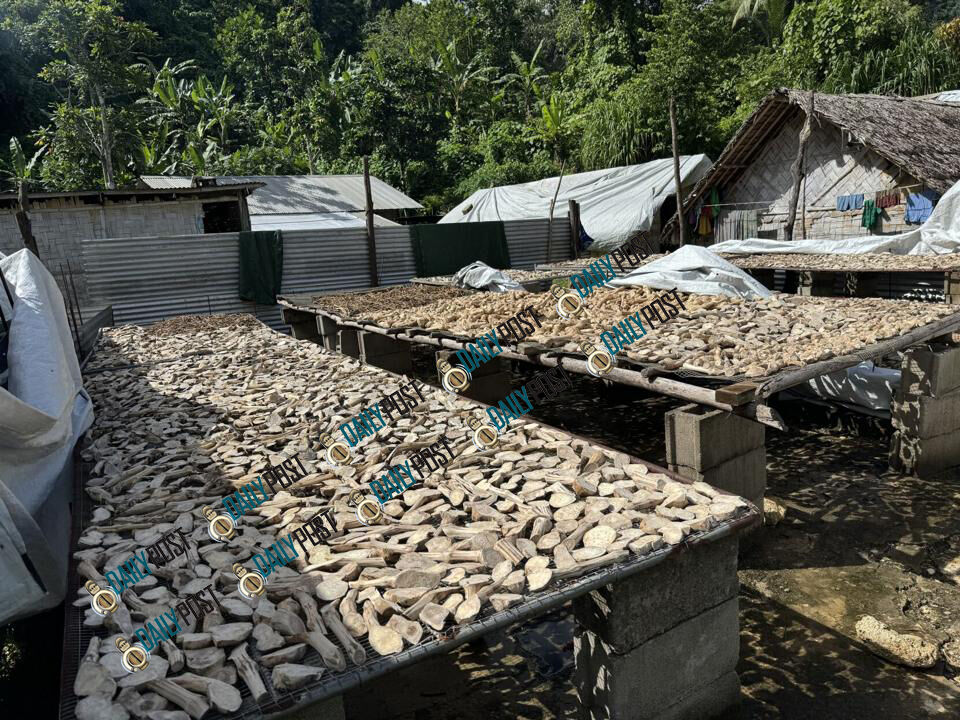
Kava farmers throughout the country are now enjoying the rapid increase in the price of dried and green kava.
A farmer from South Pentecost, Donald Wabak, said last week he was surprised to receive VT38,000 when he sold dried kava from less than half of a 25 kilogram bag.
Mr. Wabak said the current price of dried kava is VT4,600 per kilo, and they are expecting that next month the price will reach VT5,000 per kilo.
He said the price of green kava has now reached VT1,300 per kilo. He said that since the commercialisation of what used to be the traditional drink of Vanuatu in the early 1980s by the late Charlot Long Wah, the price had never reached that level.
Mr. Wabak said last week a buyer from South Pentecost purchased green kava at VT1,300 per kilo.
He said if the upward trend continues, they expect prices to keep rising.
The kava farmer said the main reason for the rapid increase is strong demand for export and the local market, while farmers on the island have less supply due to damage caused by Tropical Cyclone Harold.
He said that with current harvesting, farmers are planting more kava, but it will take about five years before it is ready for harvest.
Mr. Wabak said one kava plant at five years old can produce over 20 new plants after harvest.
He also called on the government, through the Ministry of Agriculture, to mechanise kava planting to increase production in the gardens.
“Today we only use manpower, and with this, we cannot meet the current demand in the local and international markets,” he said.
Farmers in Santo have also signalled an increase in both dried and green kava prices.
A farmer from South Santo said green kava is now VT1,000 per kilo, dried kava chips are VT4,000, and dried roots are VT4,600.
Santo, Malekula, Pentecost and Epi are the main islands supplying kava to international and local markets.
Mr. Wabak is calling on the government through the Ministry of Agriculture to mechanise kava planting. So far, farmers are only using manpower for planting and harvesting.
Last year, the Ministry announced its plan to increase kava production to 10 million plants by 2030.
Minister of Agriculture, Livestock, Forestry and Biosecurity, Ian Wilson, said last year that the ministry is looking to establish its own fleet to build feeder roads in an attempt to boost the number of kava plants on the islands.
Last week, a kava buyer from the United States came to Vanuatu due to strong demand in the U.S. market.
Jeffrey Bowman expected to buy 100 tonnes of green kava but was unable to secure enough supply.
Mr. Bowman returned to the U.S. with four containers of dried kava.
He said in America he supplies 500 kava bars, and the four containers will not last one month.
In Port Vila, a kava bar owner is urging kava bar operators to set up an association to address rising prices.
He said he now pays VT800 for green kava in the islands but is not making money due to transport costs.
The kava bar owner is asking the government to subsidise transportation of kava to Port Vila.
He said there is a need for kava bar owners to form an association to agree on pricing, including the eventual price of a shell of kava.
The price of a shell of kava starts from VT50.
The last increase in the price of kava was in the early 1990s when dried kava reached VT1,000 per kilo.
At that time, kava was known as the “Green Gold of Vanuatu.”
Following the increase in kava prices, the President of the PENAMA Provincial Government Council (PPGC), Charlot Tabigerian, is calling on people to spend their money wisely.
“You have to spend your money on things you need, not on things you want,” he said.
The PPGC President said this increase is normal in business when demand is higher than supply.
Mr. Tabigerian said that now that prices have increased, people are planting more kava, which could result in, after 10 years, supply exceeding demand and causing prices to drop again.
He said a similar situation occurred during the last kava boom at VT1,000 per kilo of dried kava, when farmers increased planting, resulting in a price decline.
Mr. Tabigerian encouraged kava farmers to take the opportunity to venture into other businesses in order to diversify their income.
He said he is planning to organise a one-day kava festival on Pentecost during the national agriculture show this month on the island of Maewo.
The PPGC head said one of the main highlights of the event will focus on the management of kava farmers’ income.