

Over 150 farmers apply for new Agriculture Permit System
August 7, 2025 9:49 pm | Posted in Business News | Share now TwitterFacebook
By Ezra Toara & Kizzy Kalsakau.
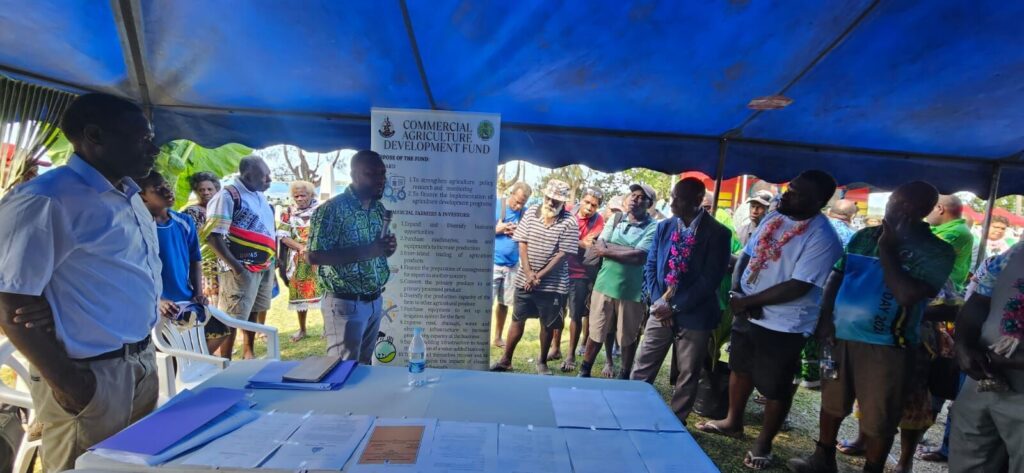
Just over a month after the launch of Vanuatu’s Agriculture Permit System, more than 150 farmers have applied for registration across its various categories.
The initiative, introduced by the Ministry of Agriculture, Livestock, Forestry, and Biosecurity (MALFB), aims to improve oversight, strengthen production, and ensure that assistance reaches genuine, committed farmers.
Director General (DG) of the Ministry, Timothy Tumukon, confirmed the early interest but said that every application will be carefully reviewed to ensure applicants meet the criteria for the permits they’re seeking.
“We’ve deliberately set a high bar for these permits,” Tumukon said. “We want to make sure support goes to real farmers who are serious about growing food and building their businesses. In the past, tools and help were given to people who weren’t actively farming, which made it hard to measure success. This time, we want to get it right.”
The Agriculture Permit System covers a range of activities across the sector, grouped into four key categories along the agricultural value chain:
- Farmers Permit– for those actively planting and producing crops.
- Buying Permit– for individuals or businesses that purchase produce directly from farmers.
- Processing Permit– for converting raw produce into other products before sale.
- Export Permit– for those exporting agricultural goods abroad.
Tumukon said the aim is to clearly define roles along the value chain—from planting to consumption—to improve efficiency.
“In Vanuatu, one person often tries to control every step, from growing to selling. This slows everything down and limits production,” he said.
He gave an example of mothers who grow and sell their produce at local markets. “They spend a couple of days at the market, then return home to replant. But if they sold their crops at the farm gate to buyers, they could use that time to expand their farms, improve crop quality, rest, and care for their families. That’s how we’ll be able to feed our people and produce a surplus for export.”
The MALFB DG acknowledged that this approach may challenge traditional ways of doing things but said it’s a shift the country needs to make to improve food security and grow the economy.
“We need to let go of some habits we’ve followed for the last 45 years if we want to become more efficient and boost exports of key crops like kava, cocoa, and others,” he said.
The system is voluntary, but only permit holders will be eligible for government support such as tools, training, and funding.
“If you hold a permit, you can apply for help. Without it, you won’t qualify,” Tumukon explained.
The programme is currently being piloted in Santo and Efate, with plans to expand to other provinces once the process is refined.
“This is our first rollout. We need to see how it runs before taking it nationwide.”
Officials believe the new system will allow the MALFB to better monitor activity, collect data, and identify where help is needed most. The long-term goal is to strengthen local food production, grow exports, and ensure support reaches farmers who are able to sustain and scale up their work.
“The goal is simple: grow enough food for our people and build a stronger agricultural economy for Vanuatu,” Tumukon said.