

Santo farmer thrives without sending kava to Port Vila
October 7, 2025 10:06 pm | Posted in Business News | Share now TwitterFacebook
By Nicholas Mwai.
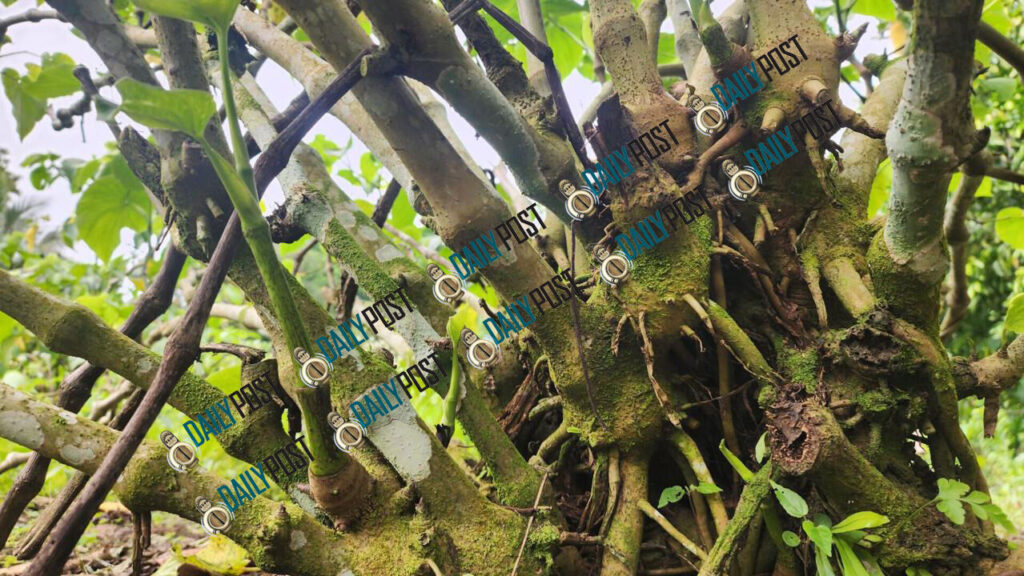
For Harrykon Tom, a kava farmer from Nambauk Village in Southeast Santo, years of dedication to his plantation are finally paying off — not just in income, but in building a lasting future for his family.
Since 2021, Farmer Tom has been harvesting his five-year-old kava, using the earnings to construct a permanent home. What began as a dream has become a reality, with the house now nearly complete and only the bathroom and toilet left to finish.
“The first goal I planted kava for was to build a nice house and a toilet and bathroom. Other things will come later, but house and household needs come first,” he explained.
Unlike many growers who ship kava to Port Vila, Mr. Tom has kept his focus on Santo. Over the past four years, he has sold his harvests directly to kava bar owners in Luganville, as well as to buyers from Malo, Tutuba, and his largest customer, Forney Enterprise.
“I’ve been selling kava here at the market and to kava bar owners in Luganville, Malo, and Tutuba. Most of my kilograms go to Forney Enterprise. Every week I harvest 50 kilograms or more,” he said. “I don’t do sundried kava — I just harvest and sell.”
Tom’s success has been boosted by improvements at the Luganville Municipal Market, where a new building dedicated to kava sales opened earlier this year. He said the facility has created more space for farmers and made it easier for kava bar owners to buy directly from them.
“At first, we sold only at the main market at 500 vatu per kilogram,” he recalled. “This new building allows more space, and kava bar owners know where to find us. Now we sell at a good price.”
Under new municipal regulations, kava is priced according to its age: 2–3 years old sells at VT700 per kilogram, four years old at VT800, and five years or more at VT1,000 per kilogram.
Farmer Tom welcomed the system, saying it has doubled his earnings compared to just a few years ago. “In the past we sold at VT500 per kilogram, but now we can sell five-year-old kava at VT1,000. It’s good for us farmers.”
With his home nearly finished, Tom is already planning his next step — buying a vehicle to make transporting his kava to clients easier.
“After the house is complete, I want to get a vehicle,” he said.
From a single hectare of kava to a permanent home and growing business, Tom’s journey reflects how Santo farmers are turning the roots of tradition into foundations for a brighter future.