First powdered ginger shipment expected next month
By Vourie Molivakoro.
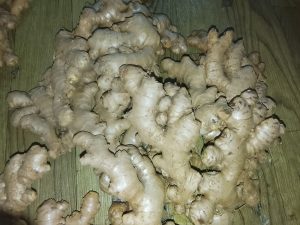
The Vanuatu Bureau of Standards (VBS) confirmed that Vanuatu is preparing to export its first shipment of powdered ginger next month, opening a new revenue opportunity for local farmers and the country’s economy.
VBS Chief Executive Officer (CEO), Atanas Pipite, said a 20-foot shipping container could carry approximately 15 tonnes of powdered ginger, with the shipment potentially generating around VT9 million in revenue at the pack house level.
Based on the estimated local buying price of VT600 per kilogram, a full container could bring significant earnings into the country through foreign exchange.
Farmers are expected to receive between VT350 and VT400 per kilogram, meaning they could collectively earn between VT3 million and VT4 million from the 15-tonne shipment.
Powdered ginger is considered a high-value product in the Australian market, where it attracts relatively high prices.
The export opportunity is expected to create an additional market for Vanuatu’s ginger producers, similar to the country’s high-value taro exports.
CEO Pipite said the development represents an important opportunity to generate income for farmers while bringing foreign currency into Vanuatu.
The export preparation follows MPipite’s r trip to France, where VBS signed a Memorandum of Understanding (MoU) with Standards Australia to strengthen technical cooperation and improve national standards.
The agreement was signed during the International Organization for Standardization (ISO) Annual Meeting in Paris, held from September 28 to October 2.
The partnership will support the development of standards in areas including building construction, kava and timber, while strengthening Vanuatu’s capacity to meet international product quality and market requirements.
It will also improve access to technical expertise, testing, inspection and certification services, which are important for local farmers, producers and exporters seeking opportunities in overseas markets.
Meanwhile, VBS continues to participate in the Pacific Quality Infrastructure Initiative (PQII), representing Vanuatu in regional committees covering standards, testing and metrology.
Recent regional developments include progress on kava standards, energy efficiency requirements for buildings and food product standards.
Vanuatu has also received high-accuracy fuel measurement equipment through the initiative, enabling inspectors to conduct faster and more reliable checks on fuel dispensers to protect consumers.
Through its laboratory services, VBS provides food safety and quality testing, product development support, instrument calibration and inspections to assist local farmers and businesses.
The bureau is also looking at emerging technologies, including artificial intelligence and cybersecurity, as part of efforts to prepare Vanuatu for technological changes.